Trikalajnan, Temple Architecture, and the Responsibility of Learning
What does it mean to understand the past, live meaningfully in the present, and prepare wisely for the future?
Indian thought offers a profound expression for this idea: Trikalajnan, the awareness of time in its three dimensions.
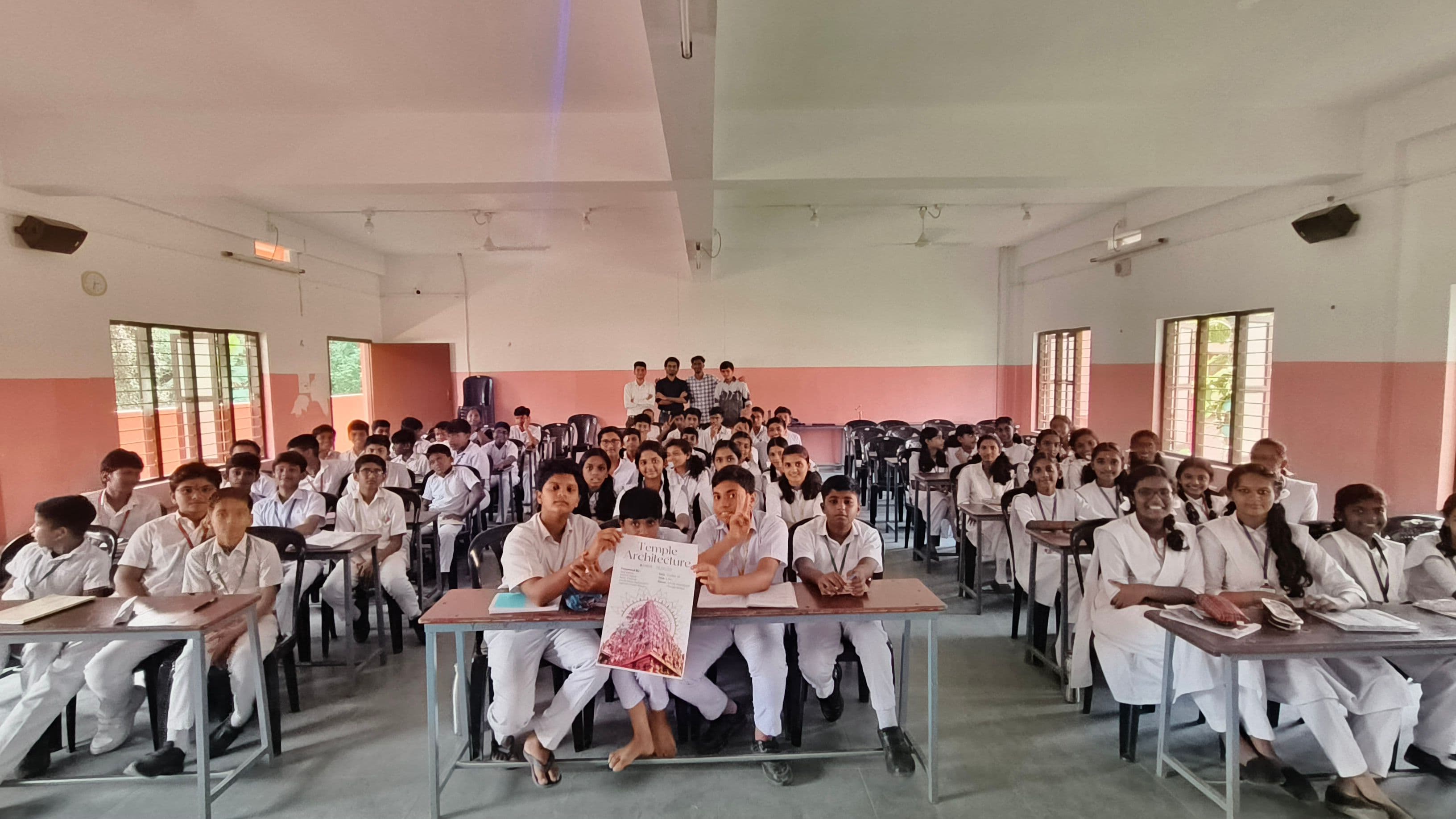
This concept became the guiding thread of our Student Social Responsibility presentation at Amrita Vidyalayam, Changanassery, where we explored temple architecture not merely as art or devotion, but as a living expression of science, philosophy, and culture.
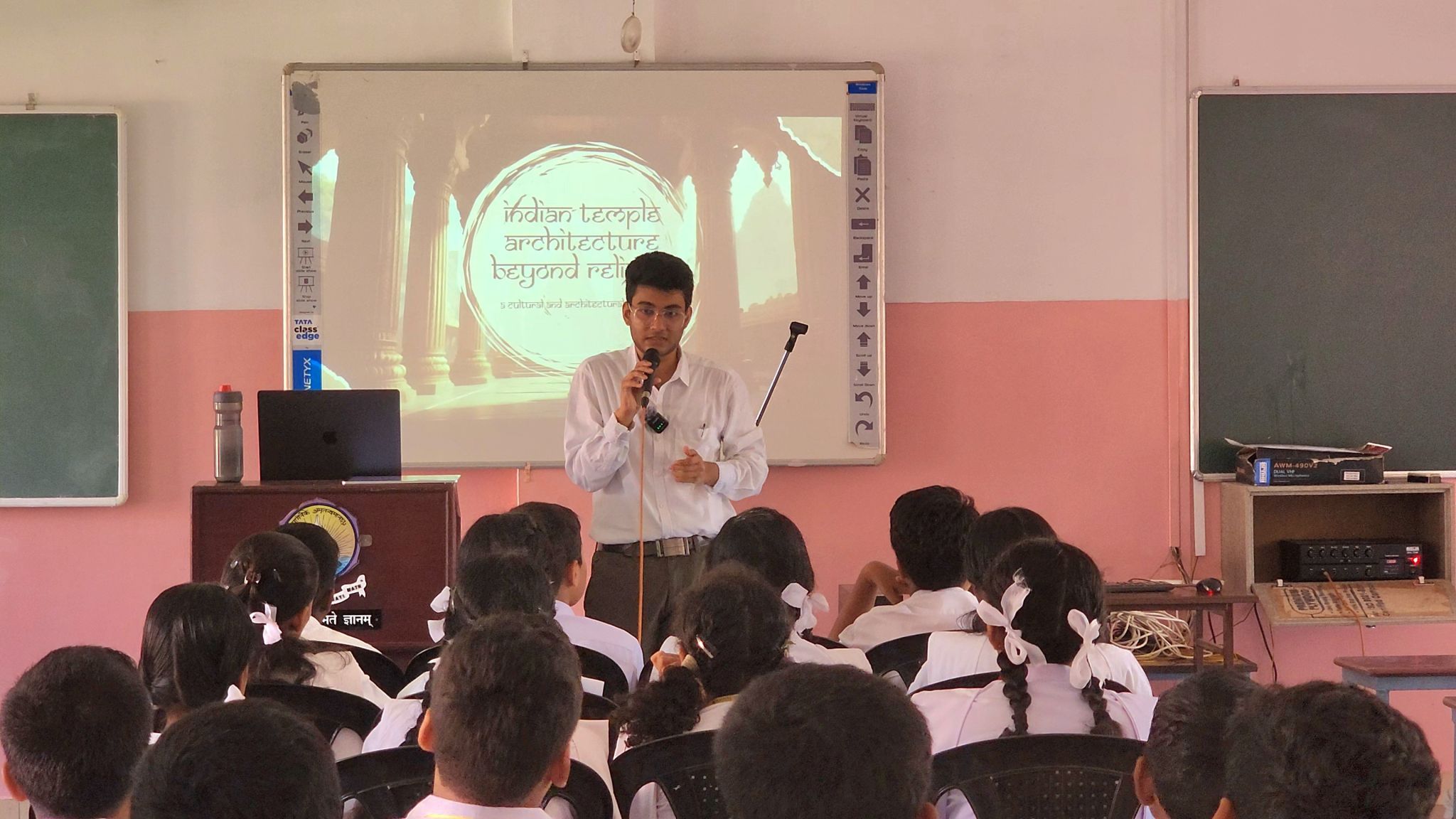
Temples are familiar spaces in our landscape, yet their deeper intent is rarely discussed in classrooms.
We wanted to change that.
We presented temples as knowledge systems.
We showed how their design reflects principles of geometry, acoustics, astronomy, ecology, and human psychology. The students quickly realized that these structures are not accidental creations of faith, but carefully designed spaces where science and spirituality work together.
In Indian philosophy, knowledge is never separated from life.
The Vastu Purusha Mandala that guides temple layout is not only a design grid but a cosmological map.
The sanctum is not simply an inner room but a representation of stillness at the center of existence.
The circumambulation path is not just a ritual movement but a symbolic journey from the outer world of distractions to the inner space of clarity.
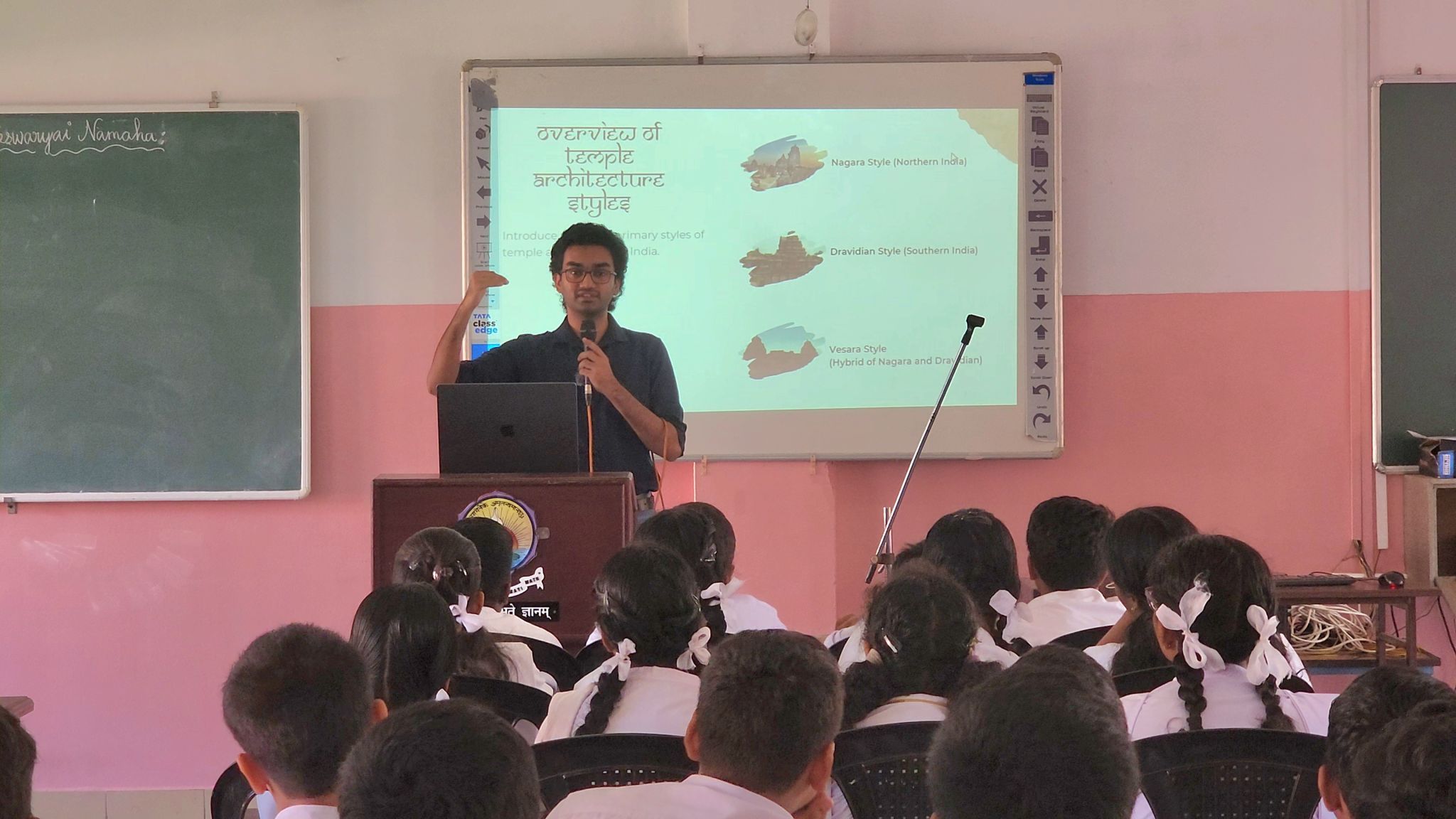
When students began to see these connections, the questions flowed naturally. They were curious, thoughtful, and eager to look beyond what textbooks usually offer.
What struck us most was how quickly young minds connected with the idea that heritage is not nostalgia. It is a repository of applied wisdom.
The temple stands as an example of how earlier generations solved complex problems of climate, materials, community gathering, mental focus, and aesthetic harmony without modern tools.
In an age where we speak constantly about sustainable design and mindful living, these ancient structures quietly demonstrate that such ideas were already well understood.
“Knowledge becomes meaningful only when it changes the way we see the world.”
This interaction reminded us of an important truth from Indian philosophical traditions.
Learning about temples was not about memorizing facts or admiring carvings. It was about realizing that our ancestors approached life with an integrated vision where art, science, ethics, and spirituality were not separate disciplines but parts of a single whole.
The session became a dialogue rather than a presentation.
Students discussed how understanding such perspectives could change the way they look at history, architecture, and even their daily surroundings.
Their curiosity reaffirmed the purpose of this initiative. Education is most powerful when it awakens inquiry rather than delivering information.
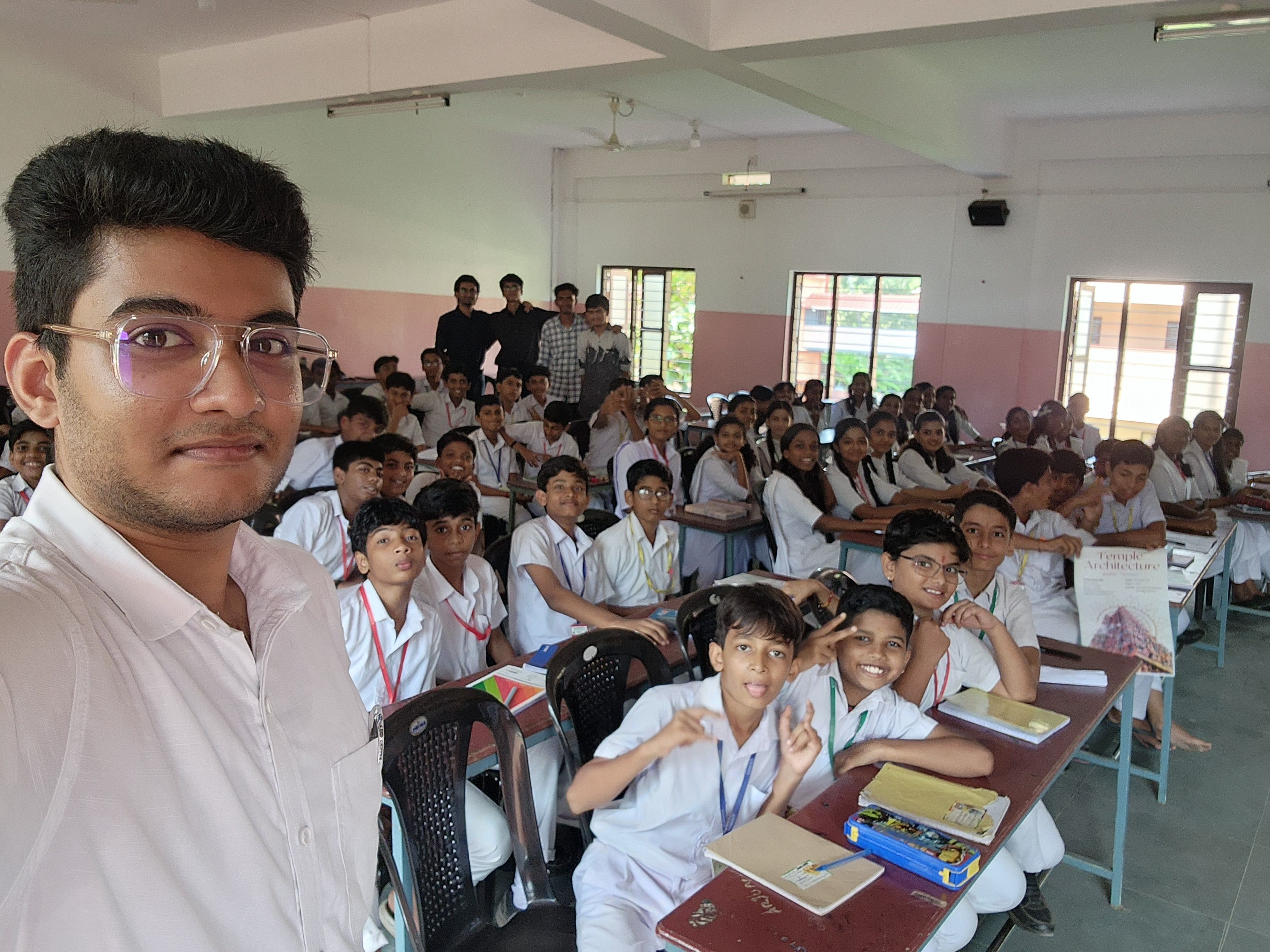
We are deeply grateful to the Principal, teachers, and faculty members of Amrita Vishwa Vidyapeetham and Amrita Vidyalayam, Changanassery, for giving us the opportunity to share these ideas.
We extend special thanks to Krishnakumar K P Sir for his guidance and encouragement throughout this journey.
This experience reminded us that Student Social Responsibility is not just about community engagement.
It is about creating meaningful conversations that help younger generations appreciate the depth of their cultural inheritance.
When students begin to see temples not just as places of worship but as embodiments of knowledge, they begin to understand that tradition is not something to be preserved in isolation.
It is something to be understood, lived, and carried forward with awareness.